

Downspout Installation and Drainage in Des Moines
Gutters catch the water, and downspouts decide where it lands. We size and place downspouts, add extensions, flip-ups and diverters, and pipe water underground to a pop-up emitter when it needs to travel farther from the foundation.
Downspouts & Drainage, Start to Finish
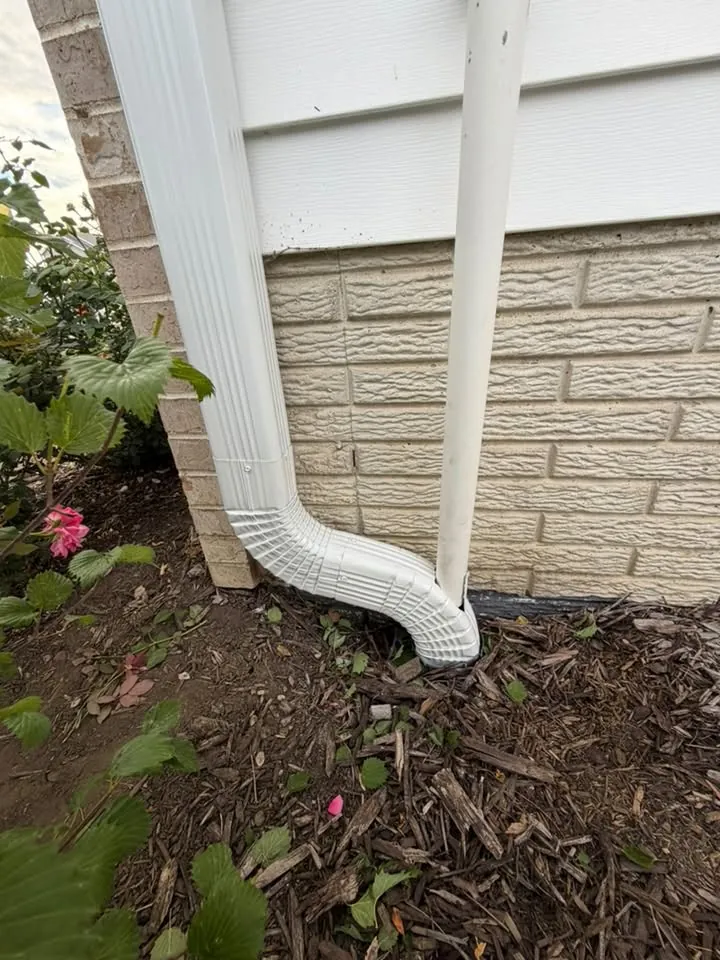
A wet basement after a hard rain is one of the most common reasons people call us, and often the gutters are fine. The trouble is at the bottom: a downspout that empties right against the foundation, a splash block that tipped over, an extension flattened by the mower, or a yard that slopes back toward the house. University of Minnesota Extension says a 1 inch rain sends about 1,250 gallons off the roof of a 2,000 square foot house. All of that water has to go somewhere.
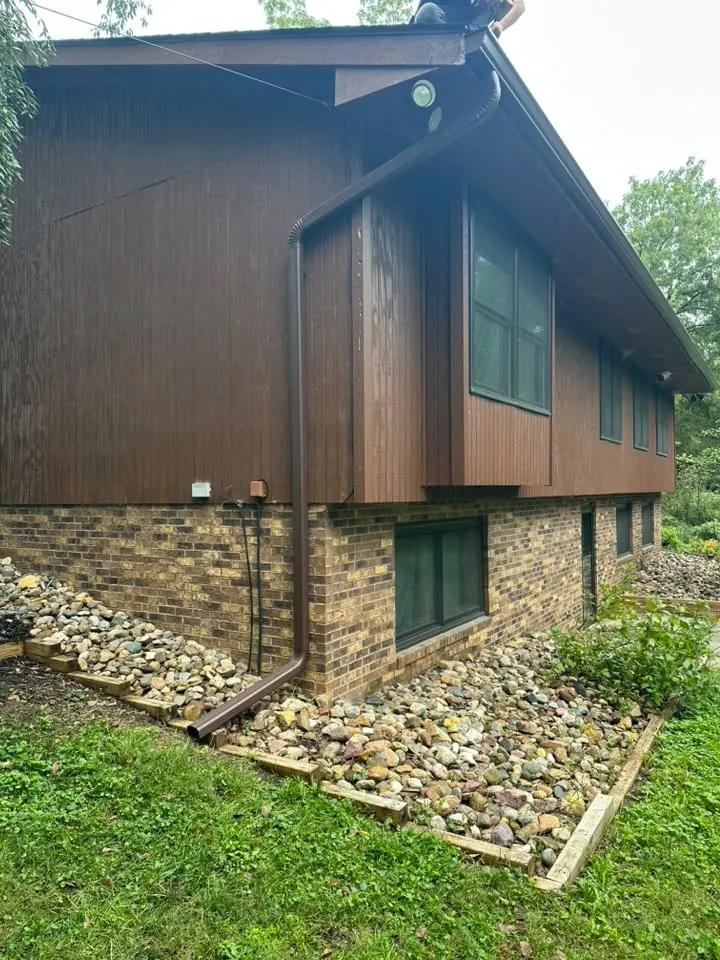
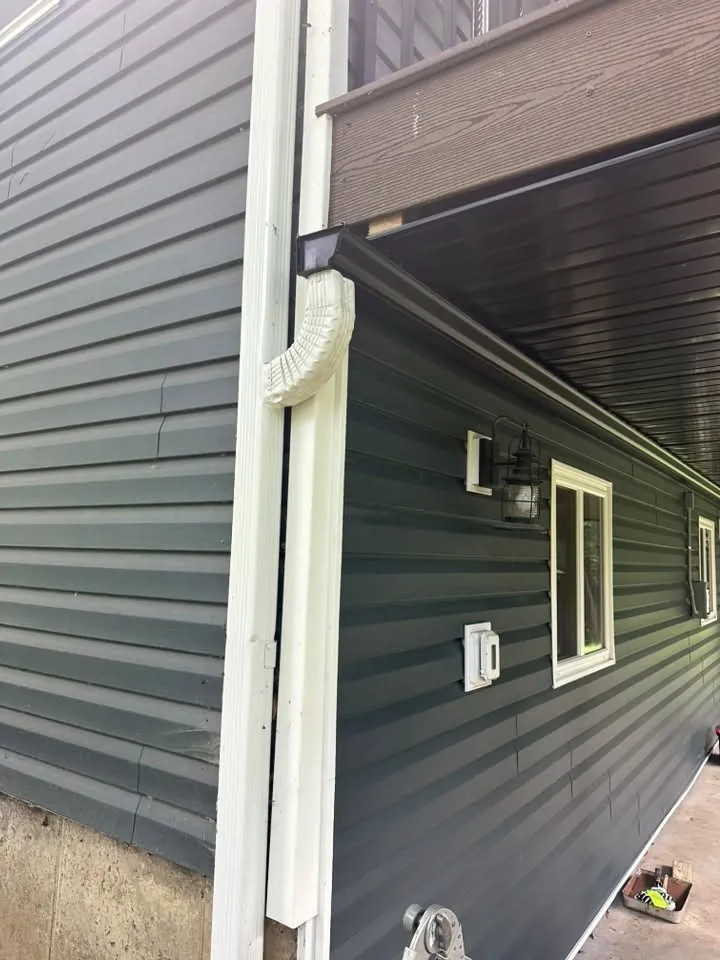
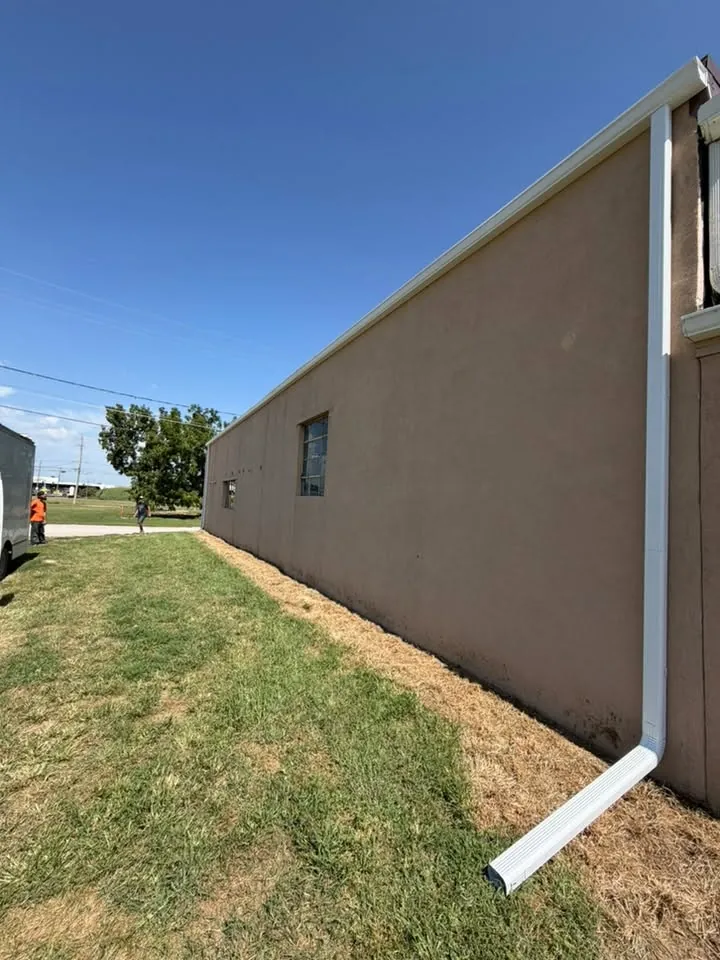
We plan downspouts as part of the gutter system. That means enough of them, sized for the roof area above, placed where water can get away from the house, and turned so it lands somewhere useful. We install downspouts including 4 inch round, bend them around stone corners and out over beds, and add hinges or flip-ups so extensions swing out of the way for mowing. Where water needs to travel farther, we pipe it away underground.
The result is water that leaves your roof and actually leaves your yard, instead of soaking the soil beside your basement wall. Luke walks the property with you, looks at the grade and where each outlet sits, and suggests the simplest fix that works. For the general rules on how far water should go, read our guide on how far downspouts should drain from the house.
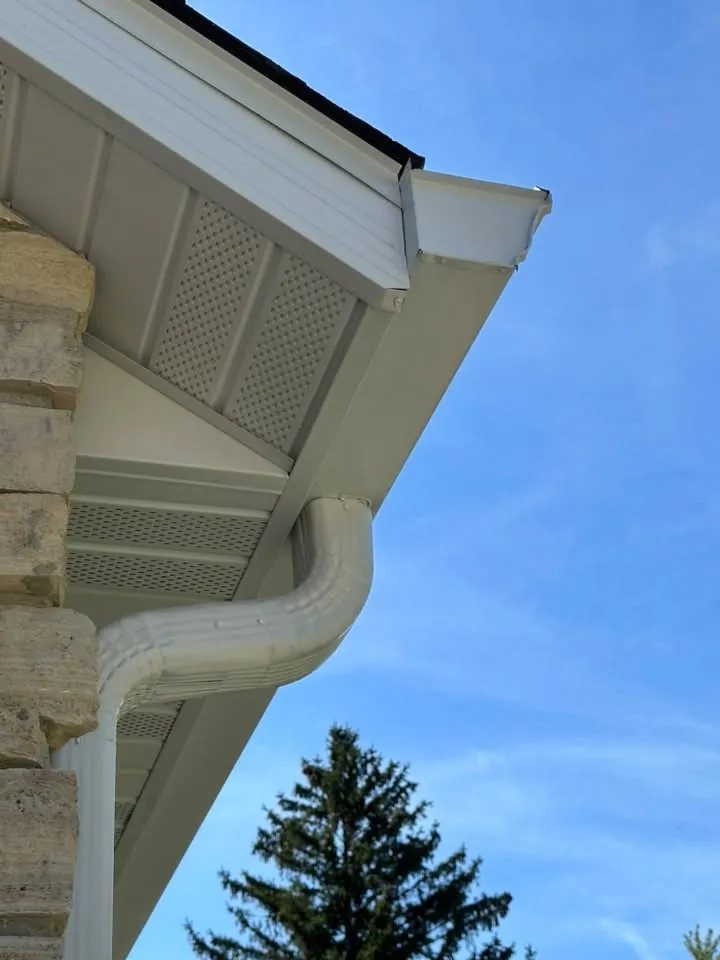
Downspout and drainage work we do
- Downspouts sized to the roof above
- 4 inch round downspouts for a softer look
- Hinged flip-ups for easy mowing
- Extensions and splash blocks that carry water out
- Underground tile to a pop-up emitter
- Rain barrels, rain chains and diverters
How big and how many downspouts
Downspouts are sized by the roof area they drain. This Old House puts a standard 2x3 downspout at about 600 square feet of roof and a 3x4 at up to about 1,200, with a rule of thumb of one square inch of opening for every 100 square feet. Angi suggests one downspout for every 25 to 35 feet of gutter. Steep roofs and valleys push more water to one spot, so they may need more. Bigger gutters pair with bigger downspouts, which is why we plan both together on a seamless gutter install.
Where the water should land
University of Minnesota Extension recommends extensions that discharge at least 4 feet beyond the wall, with soil sloping away about an inch per foot for the first 6 feet. It also warns that a downspout with no extension or splash block can be worse than no downspout at all. We turn outlets toward lawn or a bed that drains away, not toward a patio, a window well or a neighbor's yard. Cities set their own rules on where water may go, so check yours before sending water toward a street or sidewalk.
Underground downspout drainage
When a downspout sits beside a driveway, walkway or patio, a long extension becomes a trip hazard. In that case we can run the downspout into underground tile, a buried pipe that carries the water across the yard to a pop-up emitter. The emitter sits flush with the grass and opens when water pushes up from below. We lay the pipe with steady fall so water keeps moving instead of sitting and freezing. Buried lines need to stay clear, so a gutter guard or downspout screen up top helps keep debris out.
Flip-ups, rain barrels and rain chains
Not every fix is buried. A hinged flip-up lets an extension swing up for mowing and back down for rain, so it actually stays in place. Rain barrels catch roof water for gardens, and a diverter can send water to the barrel while the overflow keeps going down the spout. Rain chains replace a downspout with a chain of cups that guide water down in plain view. They look sharp by a front entry but carry less water than a downspout, so they suit smaller roof areas.
Downspouts & Drainage Questions
Not seeing yours? Call or text (515) 901-3646 and ask Luke.

Luke, Jaxx & Larry
A family business, third generation. Luke runs every estimate himself and Jaxx works the jobs with him. Larry, the shop dog, mostly supervises.
How far should a downspout extension reach from my foundation?
University of Minnesota Extension recommends discharging at least 4 feet beyond the wall, and farther is better where the yard is flat. The ground should also slope away from the house, about an inch per foot for the first 6 feet. If a long extension is in the way, an underground line to a pop-up emitter can carry water farther without a trip hazard.
What is a pop-up emitter on a buried downspout?
A pop-up emitter is the cap at the end of an underground downspout line. It sits flush with your lawn, and when rain pushes water through the pipe, the lid lifts and lets water spill out across the grass. When the rain stops, it drops closed again, which helps keep debris and critters out of the line and lets you mow right over it.
Why is my basement wet after rain when my gutters are clean?
Clean gutters only solve half the problem. The usual culprits are downspouts that empty right at the foundation, missing or short extensions, splash blocks that tipped, and soil that slopes back toward the house. Overflow at a corner from an undersized gutter can also soak one spot. We look at where every outlet lands and fix the ones sending water back toward your basement.
Can you add more downspouts to the gutters I already have?
Usually, yes. If one downspout is handling too much roof, we can cut in a new outlet on a long run and add a downspout where water can get away from the house. That alone often fixes overflow at a far corner. If the gutters are too small or badly pitched, Luke will tell you, since a new outlet cannot fix everything.
Do you install underground downspout drainage in Des Moines?
Yes. We install underground downspout lines with pop-up emitters across Des Moines, the suburbs and Central Iowa. Every yard is different, so Luke will walk the property, look at the grade and suggest where a line can run. Learn more about our work in Des Moines, or call or text (515) 901-3646 for a free estimate.
How a Job Runs
Call or Text
Overflowing gutters, tired siding, a drafty window or an addition you have been planning. Tell us what is going on.
Free Estimate
Luke comes out, looks at the house, measures, and walks you through your options in plain words.
A Clear Plan
You get a written estimate and a straight recommendation. No pressure and no runaround.
Install Day
Our crew does the work and keeps the job site clean while we are there.
Walkthrough
We walk the finished job with you and make sure everything is right before we leave.
Downspouts & Drainage Near You
Our shop is in Mitchellville. Pick your town, or call and ask if we cover it.
More services
Siding
LP SmartSide and vinyl siding installed or repaired, with soffit, fascia and trim to match.
DetailsWindows
Casement, double-hung, sliding, bay, garden and egress windows from Alside and Marvin, installed right.
DetailsDoors
Entry, patio and storm doors installed square, sealed and trimmed to keep Iowa winters out.
DetailsNeed Downspouts & Drainage?
Call or text Luke, or send a few details. Estimates are free, and you get a straight answer on what the house needs.